Total Knee Replacement patient information
This page is general information intended for patients of Dr. Borshch. Your situation may be different, so please follow the advice of your surgeon and treating team.
What is it?
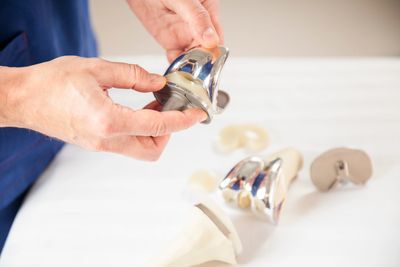
A total knee replacement (also called a total knee arthroplasty) is an operation where the damaged joint surfaces of the knee are replaced with metal and plastic components. The aim is to:
- reduce pain
- improve walking and daily function
- improve quality of life
The kneecap surface may also be replaced with a plastic component in some cases, this depends on the quality of the remaining cartilage on the kneecap at the time of surgery.
Why is it done?
The most common reason is knee arthritis (especially osteoarthritis), where the smooth cartilage wears away and the exposed underlying bone begins to transmit pain signals.
A knee replacement is usually considered when:
- Pain is affecting walking, stairs, sleep, or work
- The knee is stiff or deformed (bow-legged/knock-kneed) or sometimes unstable.
- Other treatment methods have been tried, but are no longer enough to manage symptoms.

How is it done?
Exact details vary, but most total knee replacements involve:
Anaesthetic
- Often a spinal anaesthetic (numbing from the waist down) with sedation, plus strong pain relief around the knee.
Accessing the joint
- An incision is made at the front of the knee either down the middle (for a smaller incision) or curved around the outer knee (to decrease numbness).
- The kneecap is moved out of the way by partially detaching the muscles to reach the joint (the muscle is reattached at the end of surgery).
Preparing the bone surfaces
- A small amount of damaged bone and cartilage is removed from the femur (thigh bone) and tibia (shin bone).
- This is done in a way that restores the alignment of the leg back to straight and ensures that the knee is stable throughout the range of motion. I use either computer navigation or robotic assistance to achieve this alignment and balance.
Placing the implants
- Metal components are attached to the bone using “bone cement”.
- A strong and durable plastic is inserted between the metal components to create the smooth movement.
Closing the incision
- The muscle is reattached using strong sutures.
- The incision is closed in many layers using strong sutures that are absorbed by the body over several months.
- The skin is closed with a fine absorbable suture under the skin layer so that it is not visible.
- I use a glued mesh over the skin incision which also holds the skin while it heals and helps create a neat scar. The longer this glued mesh is left in place (4 to 6 weeks), the better the scar should heal. (https://pubmed.ncbi.nlm.nih.gov/40047817/)
How to prepare for surgery.
Good preparation lowers risk and helps recovery.
Health optimisation (very important)
- Stop smoking/vaping if possible (smoking increases wound and infection risks).
- If you have diabetes, aim for good blood sugar control.
- Work on fitness and weight where possible—stronger muscles and better general health usually mean smoother recovery.
- Tell the team about any history of blood clots, sleep apnoea, heart/lung disease, or immune-suppressing medications.
Prehab (exercise before surgery)
Home preparation
- Arrange help for the first 1–2 weeks (meals, shopping, transport).
- Make your home safer: remove loose rugs, organise a stable chair, consider railings, and set up a bed/bathroom plan.
- Prepare icing options and comfortable walking paths.
Medications
Your team will advise what to stop or continue (for example, some blood thinners, anti-inflammatories, or supplements). Always check before changing anything.
What to expect after surgery.
In hospital (often 1–3 days, sometimes next-day discharge)
- Pain control using a multimodal plan (several types of pain relief together).
- Early walking and exercises with the help of an inpatient Physiotherapist.
- A blood clot prevention plan (medication and movement), guided by your risk factors.
First 2–6 weeks
- You will have your first review back in the office (usually with the nurse), this is mainly to check that the incision is healing well, make sure your pain is controlled and address any other concerns.
- Your walking improves steadily, usually with a walker/crutches early, then a stick, then independently.
- Swelling is common (often worse in the afternoon).
- You’ll do regular exercises to regain movement and strength with the help of an outpatient Physiotherapist. We are aiming for at least 90 degrees of flexion by 6 weeks post surgery.
- Driving is usually not safe until 6 weeks post surgery or when leg strength is close to normal.
6 weeks to 3 months
- You will have your first review in the office with me, this is mainly to check your knee range of motion.
- Most people notice major improvements in daily activities.
- Strength and endurance continue to build.
- Some stiffness or swelling can still be normal.
3 to 12 months
- Ongoing improvement in strength, balance, confidence and cosmetic appearance of the knee.
- Some people continue to notice gains up to a year (or longer).
Long term outcomes.
Pain relief and function
Most people get substantial pain relief and improved function after knee replacement.
Implant longevity (“How long will it last?”)
Modern knee replacements often last a long time. A major review of population and registry data estimated that:
- about 9 in 10 knee replacements are still working at 15 years
- many still last 20 years or more
Satisfaction and ongoing symptoms
Most patients are very happy with the result, but not everyone is satisfied with the outcome.
- A well-known study found about 1 in 5 patients were not fully satisfied (often due to pain, function limits, or expectations).
- Persistent long-term pain occurs in a minority, often quoted around ~20% in some studies and reviews. (https://pmc.ncbi.nlm.nih.gov/articles/PMC6134884/)
It is very important for us to discuss the indications for surgery beforehand, optimise pre-operative treatment and have clear expectations of the short-term and long-term outcomes.
Things to look out for (and when to seek help)
Contact our office, your GP, or go to hospital urgently if you notice:
Possible infection
- increasing redness, warmth, or swelling around the wound
- worsening pain after initial improvement
- pus or bad-smelling discharge
- fevers or feeling very unwell
(Periprosthetic joint infection after primary knee replacement is uncommon (around 1.5%) but very serious) (https://pmc.ncbi.nlm.nih.gov/articles/PMC11470562/)
Blood clot warning signs
- new calf pain/tenderness, increasing swelling in one leg
- sudden shortness of breath, chest pain, coughing blood (call emergency services)
Stiffness that is not improving
- Difficulty bending/straightening despite regular exercises and physio (early review can help improve the movement).
Wound problems
- leaking through dressings, opening wound edges, or rapidly increasing bruising/swelling.
Nerve or circulation concerns (rare)
- worsening numbness/weakness in the foot, cold/pale foot, severe escalating pain.
My take on Total Knee Replacement surgery.
Total Knee Replacement is a very successful operation when it is done for the correct reason and after all other treatment has been tried. Having a good pre-operative, in-hospital and post-surgery plan helps lead to the best possible outcomes and minimise the risk of complications.